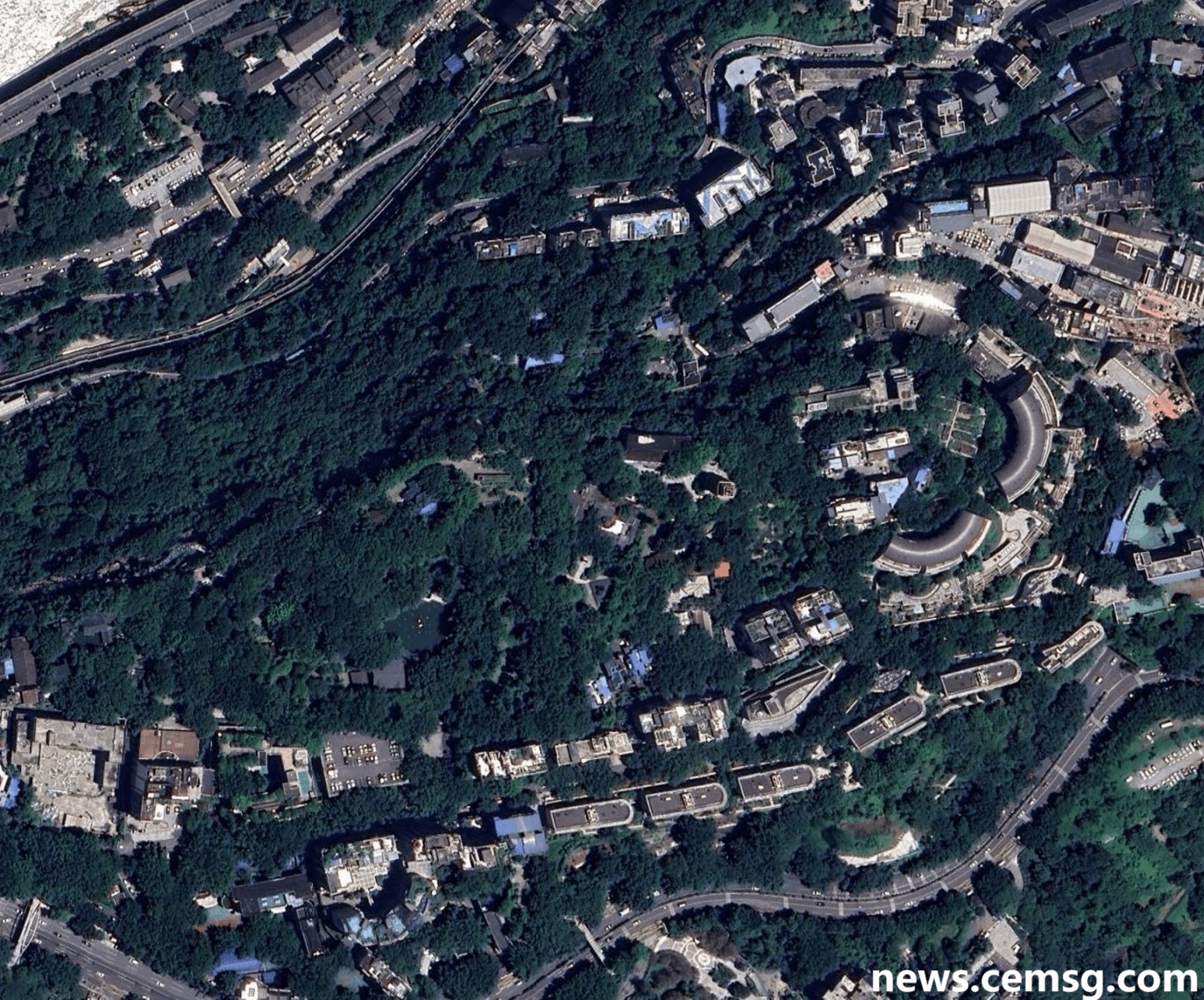
Chongqing Eling Park
Eling Park (Chongqing)
Eling Park (Chinese: 鹅岭公园), also known as Goose Ridge Park or Goose Neck Park, is a historic hilltop park located on Changjiang Road in the Yuzhong District of Chongqing Municipality, China. As one of the key state parks of China and a nationally protected area, it sits at the highest point of the Yuzhong Peninsula, offering some of the most spectacular panoramic views of the city where the Yangtze and Jialing Rivers converge.
Historical Background
Eling Park was originally built during the late Qing Dynasty (1644-1911) as a private garden named "Yiyuan" (Courteous Park) or "Liyuan". It was constructed between 1909 and 1911 as the villa of Li Yaoting, a wealthy salt merchant from Yunnan who served as the first chairman of the Chongqing Chamber of Commerce.
The park's name has an interesting origin story. A friend of the garden's owner, a calligrapher named Zhao Xi, observed that the topography of the mountain resembled the neck of a goose. He wrote down the characters "鹅嶺" (Eling) and presented them to the owner, who was delighted and immediately had them carved into a stone tablet.
In 1958, the Chongqing municipal government renovated and improved the park, adding new buildings and pavilions, planting flowers and trees, and officially renamed it "Eling Park".
Historical Significance
Eling Park holds significant historical importance, particularly during the Anti-Japanese War (1937-1945) when Chongqing served as China's provisional capital. During this period, more than 30 countries relocated their embassies to Chongqing, and the park became home to several foreign diplomatic missions.
The former sites of the Australian and Danish legations can still be found within the park. The Australian legation, in particular, operated from 1941 to 1946 as Australia's first diplomatic organ in China, and the building remains well-preserved to this day. A plaque gifted by the Australian Embassy in China and unveiled by the Australian government in 2006 greets visitors at the entrance.
The park also served as a temporary residence for notable historical figures. Mr. and Mrs. Chiang Kai-shek stayed here for six months, and the former British ambassador Karl Rove resided here for five years. After the liberation of Chongqing in 1949, the Southwest Military Command was established on the grounds.
Major Attractions
Liangjiang Pavilion (Kansheng Building / Viewing Pavilion)
The seven-story Liangjiang Pavilion, also known as Kansheng Lou, stands as the highest point in Eling Park. Climbing this tower rewards visitors with breathtaking 360-degree views of Chongqing's cityscape, the winding mountain roads, bridges, and the spectacular confluence of the Yangtze and Jialing Rivers. At night, it becomes one of the most famous spots to appreciate the dazzling city lights of Chongqing.
Soviet Martyrs' Tomb
Built to honor Soviet Air Force officers who sacrificed their lives defending Chongqing during the Anti-Japanese War, this solemn memorial commemorates Colonel Shtof and Kartov, among others. Hundreds of Soviet military personnel who made the ultimate sacrifice for China's freedom from Japanese occupation are laid to rest here. It remains the only major Soviet burial site in Chongqing, and locals visit annually to pay their respects.
Tongxuan Stone Chamber
Built in 1911 as a place for Li Yaoting to cool off during summer, the Tongxuan Stone Chamber is reportedly carved entirely from a single boulder. It features Chinese and Western-style window decorations, and on its stone walls, one can find solar terms and various maps from that period.
Exiang Villa (Goose Neck Villa)
Exiang Villa stands out with its distinctive design featuring yellow walls, grey tiles, and elegant flying eaves. Winding corridors connect delicately carved halls and pavilions, while arched gateways frame lush greenery like living paintings. The wooden lattice windows inside vary in shapes and designs, perfectly capturing picturesque views of ancient trees and flowers.
Stone Rope Bridge
Located in the central area of the park, the Stone Rope Bridge is an iconic S-shaped stone bridge that crosses over Rong Lake. Its balustrades are shaped like two thick, twisted ropes, giving the bridge its distinctive name.
Flying Pavilion (Feige)
Built in 1939, the Flying Pavilion covers 319 square meters and adopts a brick-and-wood structure with turquoise tiles and colorful eaves. Its hexagonal shape and upward-curving eaves resemble a bird spreading its wings, giving the pavilion its poetic name.
Lotus Pond and Long Corridor
During summer, the blooming lotuses and water lilies become a seasonal highlight. At the Lotus Pond and in front of Exiang Villa, large clusters of lotus flowers unfold against emerald leaves, while water lilies float gracefully on the crystal-clear pond.
King Tree (Huangge Tree)
On the hilltop grows a 175-year-old Huangge Tree, also known as the King Tree. With a trunk circumference of about 6.6 meters, it takes four adults to encircle it. The Tree King Square around it provides a relaxing spot for visitors to rest and enjoy tea.
Garden Design
Eling Park displays the layout of classical Jiangnan (southern Yangtze River region) gardens. Traditional Chinese elements such as pavilions, winding paths and corridors, lotus ponds, stone bridges with arches, flowing water, and rockeries are carefully arranged to create poetic scenery. The man-made landscapes on the mountain look quite elegant, and there are also potted landscape gardens with unique characteristics. The park is home to special plant species and offers visitors a serene escape from the bustling city below.
Visitor Information
Location: No. 176 Eling Main Street, Yuzhong District, Chongqing
Opening Hours: 6:00 AM to 10:00 PM (some sources indicate 8:00 AM to 10:30 PM)
Admission: Free (a small fee of approximately 5 yuan may be charged for accessing the Kansheng Building)
Transportation: Take Chongqing Metro Line 1 to Eling Station, use Exit 2A, and walk approximately 360 meters to reach the park. Multiple bus routes also serve the area, including No. 808, 318, 503, 210, and 829.
Best Time to Visit: Late afternoon to sunset to early evening, allowing visitors to experience both daytime and nighttime city light views. Spring and summer typically offer clearer visibility. Visitors are advised to bring mosquito repellent due to the park's dense vegetation.
Tour Video: https://www.youtube.com/watch?v=hDWe7rHK2UU
Satellite Map: https://www.tourbrowser.com/map-1278.html