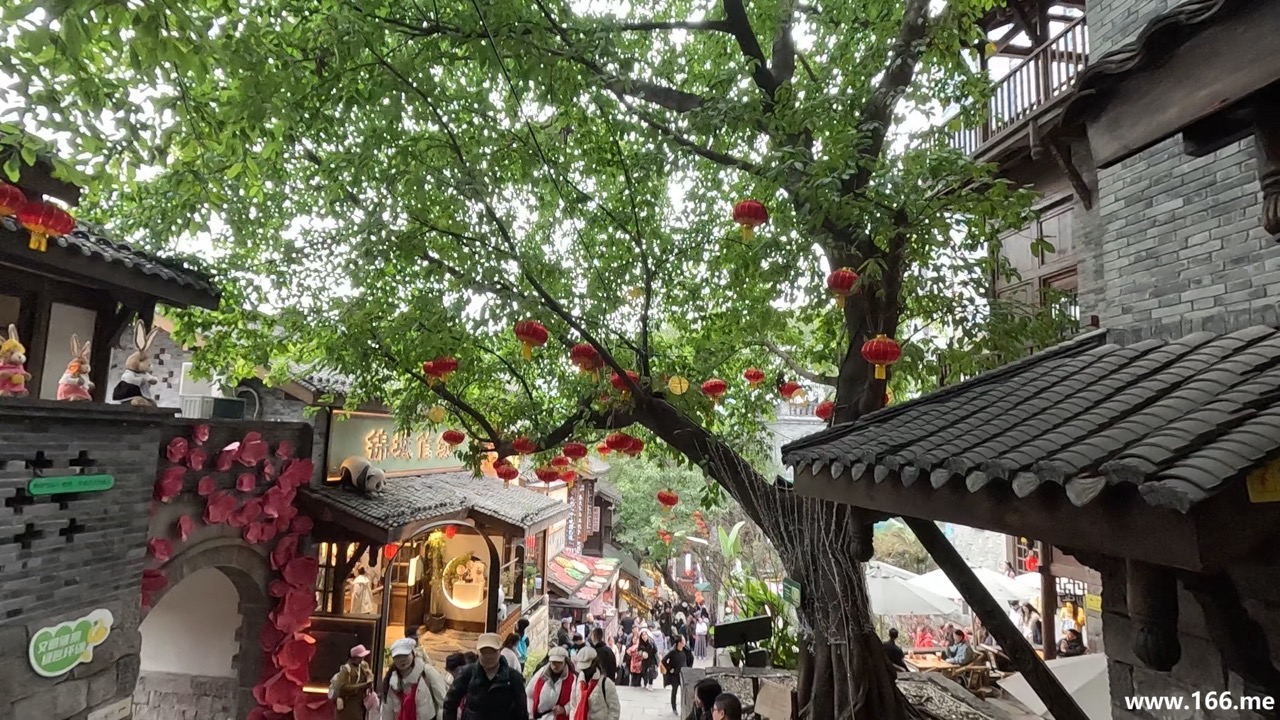
Shibati Traditional Style Area (Chongqing)
The Shibati Traditional Style Area (十八梯传统风貌区) is a historic and culturally significant scenic area located in the Yuzhong District of Chongqing, China. Situated at the intersection of the city's "upper and lower halves," it lies approximately 500 meters from the bustling Jiefangbei business district and descends toward the Yangtze River .
History and Name Origin
Shibati is one of Chongqing's oldest streets, with a history as long as that of the eight-hundred-year-old "Chongqing Prefecture" . The name "Shibati" (meaning "Eighteen Steps") has two main origin stories. One legend says that during the Ming and Qing Dynasties, residents used water from a local well (which still exists near No. 162 Shibati), and the pathway connecting the well to the town had exactly eighteen steps . Another story claims that during the Qing Dynasty, a sloped stone stairway with over 200 steps was divided into eighteen levels, each with a small platform for rest, hence the name .
Historical Evolution
During the late Qing Dynasty and the early Republic of China period, Shibati developed into a bustling commercial and residential area . After Chongqing opened as a port in 1891, the area's strategic location along the river brought rapid development, with many commercial establishments and guild halls flourishing . In the 1930s and 1940s, the area featured a mix of architectural styles, including traditional stilted buildings (diaojiaolou), bamboo-and-clay houses, and later brick and reinforced concrete structures .
During the Second Sino-Japanese War (1937–1945), when Chongqing served as China's wartime capital, Shibati became home to many refugees from eastern China. Its hidden alleyways and hilly terrain offered relative safety from air raids, attracting new residents and dense urban settlement .
Decline and Transformation
After the founding of the People's Republic of China, Chongqing underwent rapid urbanization. The construction of modern roads connecting the city's upper and lower halves gradually reduced Shibati's role as a transportation artery . Over time, it evolved into a run-down residential neighborhood. Many original residents moved away, and the area's infrastructure deteriorated. Housing conditions worsened significantly, with many wooden structures falling into disrepair, cracked walls, and poor sanitation .
Restoration and Revival
In 2017, the Chongqing government launched a major renovation project to preserve and restore Shibati as a cultural landmark . The Shibati Traditional Style Area was designated as one of Chongqing's 29 traditional style districts, covering approximately 88 mu (about 5.9 hectares), with a total building area of 160,000 square meters .
Design Philosophy
The restoration project faced a key challenge: how to preserve and pass on the traditional culture of Shibati rather than simply building a modern commercial complex . To address this, the developers consulted with local residents, historical experts, and archival materials to develop a plan that would:
- Preserve the unique "market culture" and everyday life atmosphere of Shibati, including traditional elements like well water drawing and sedan chair culture
- Retain the natural features, including the stone steps and mature trees
- Rebuild structures according to the original terrain, using the distinctive stilted building forms
- Restore and protect usable existing buildings and landmarks
The design extensively incorporated traditional architectural techniques from the Bashu region, including methods of lifting, hanging, spanning, framing, and turning . By combining elements such as steps, ancient trees, courtyards, and wells, the designers created unique cultural scenes and immersive experiences . Each building was given a "facade ID card" to ensure precise execution of materials, craftsmanship, and details .
Current Features
The Shibati Traditional Style Area officially opened to the public on September 30, 2021 . It preserves the original "seven streets and six alleys" layout while adding new cultural and tourist nodes such as an intangible cultural heritage district . The restored area features traditional architecture including wooden stilted houses, grey-tile roofs, and historic courtyards, alongside modern cafés, cultural shops, teahouses, and street food vendors .
Notable preserved structures include the Bayu Family residence at No. 35 Shanguo Alley, a well-preserved courtyard house dating back to the original construction of Shibati .
Visitor Information
Location: Yuzhong District, near Jiefangbei, Chongqing
Transportation:
- Metro Line 1 or Line 6 to Xiaoshizi Station, Exit 5, about a 10-minute walk
- Metro Line 2 or Line 3 to Linjiangmen Station, about 10–15 minutes downhill walk
- Multiple bus routes including 111, 114, 132, 151, 181, and 262
Today, Shibati has become a new cultural calling card for Chongqing, attracting over one million visitors during the 2025 National Day and Mid-Autumn Festival holiday period . It offers visitors an authentic experience of old Chongqing's lifestyle and environment while demonstrating how urban renewal can successfully preserve and revitalize historical heritage.
Tour Video: https://www.youtube.com/watch?v=zccKHqf3MW4
Satellite Map: https://www.tourbrowser.com/map-1280.html