New Progress Made in China's Invasive Brain-Computer Interface Clinical Trial
According to China Central Television, on December 17, 2025, the Center for Excellence in Brain Science and Intelligent Technology of the Chinese Academy of Sciences announced new progress in the second case of invasive brain-computer interface clinical trials conducted in collaboration with domestic research institutions and medical units. This clinical trial achieved a significant technological breakthrough, transitioning from two-dimensional screen cursor control to three-dimensional interaction in the physical world.
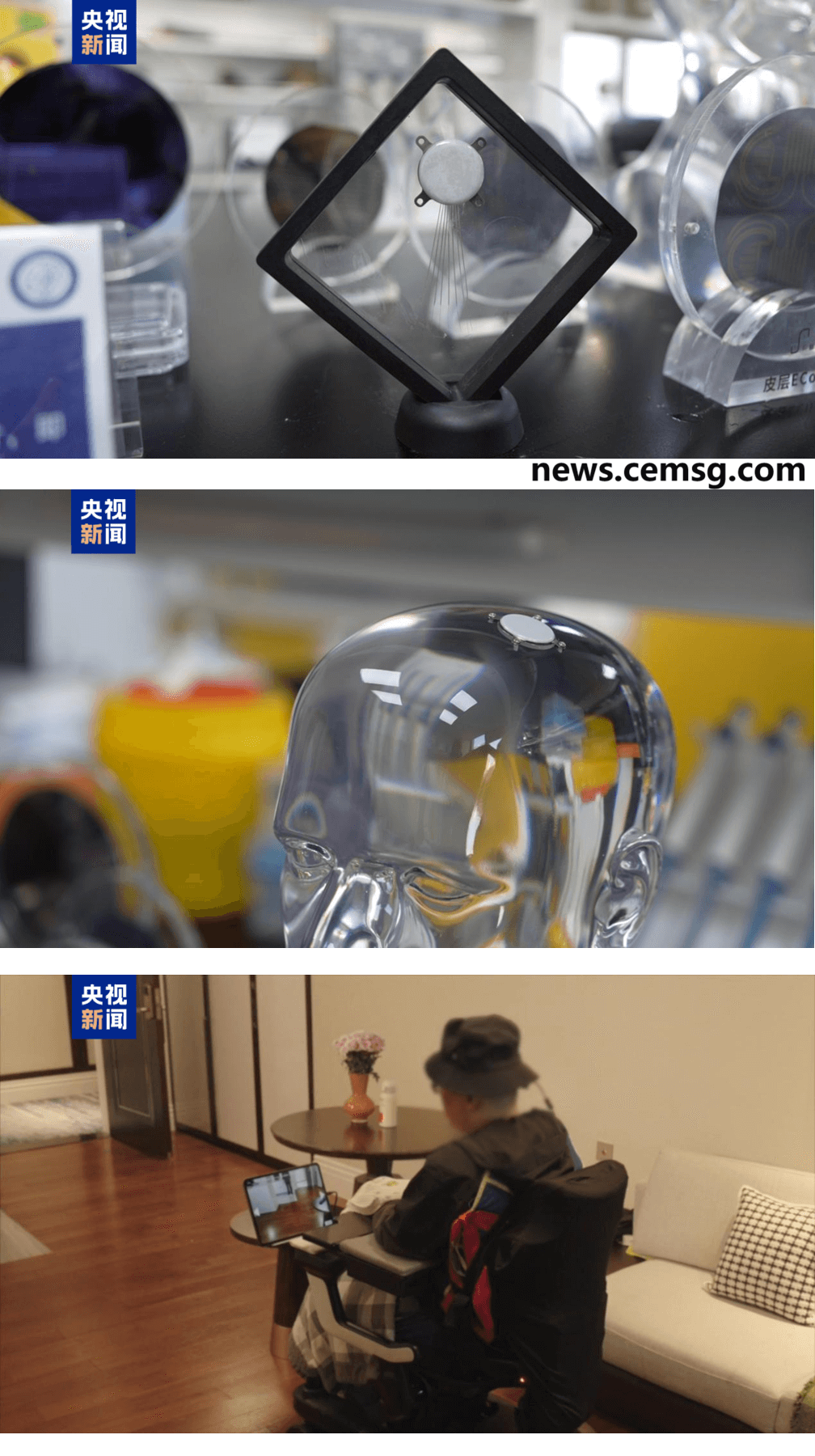
The participant in this brain-computer interface clinical trial is a middle-aged male patient. Following an unfortunate fall, the patient suffered spinal cord injury in 2022, resulting in quadriplegia. After more than a year of rehabilitation, his condition showed no improvement, and he retained only limited head and neck mobility. In June 2025, the patient was implanted with a brain-computer interface system developed by the research team. Initially, after two to three weeks of training, the patient could control electronic devices such as computer cursors and tablets through thought, achieving the same level of performance as the first participant in the research team's initial invasive brain-computer interface clinical trial. To further enhance the user's ability to interact with the surrounding environment, the research team introduced additional new technologies, successfully expanding the application scenarios of the brain-computer interface from two-dimensional screens to the three-dimensional physical world. Currently, the system allows the user to operate at speeds close to those of an average person using a mobile phone or computer, as well as preliminary control of embodied intelligent robots through brain "thoughts."
The invasive brain-computer interface consists of two parts: a front-end sensor and a back-end processor. The front-end sensor is as thin as approximately one-hundredth of a human hair. About 5 to 8 millimeters of the sensor are embedded into the patient's brain, and the skull is thinned by 3 to 5 millimeters to embed the back-end processor. The entire process is minimally invasive. The front-end sensor acts like a network cable connecting the brain to the external world, uploading and downloading various types of information. The back-end processor translates the brain's faint neural activity into digital signals—the language that machines can understand. This enables the user to control external devices and assist in daily life through thought.