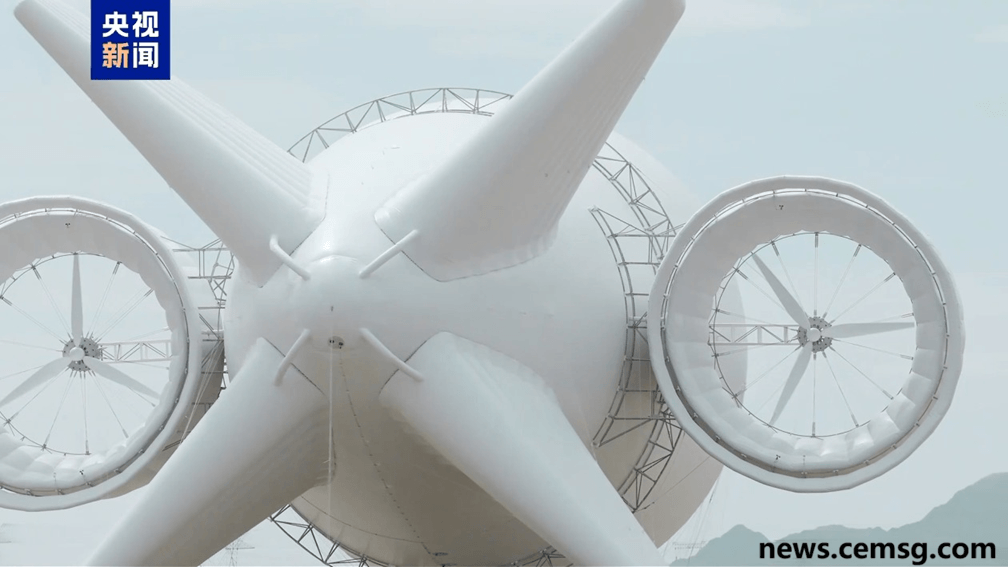
China's S4000 Stratosphere Airborne Wind Energy System (SAWES)
The S4000 is a domestically developed stratospheric airborne wind energy system (SAWES) that represents a major breakthrough in China's high-altitude wind power technology. On August 22, 2026, it was announced that the system had successfully completed a full-process flight validation test at a base in Northwest China, marking the transition of this technology from the iterative development phase toward engineering deployment.
Core Technical Specifications
The S4000 is an upgraded iteration of the earlier S2000 model, featuring a new configuration with comprehensively improved performance. Its key specifications include:
| Specification | Detail |
|---|---|
| Maximum Operational Altitude | 4,000 meters |
| Design Service Life | Up to 20 years |
| Deployment | Suitable for the vast majority of regions across China |
| Grid Integration | Can be directly adapted to mainstream power grid supply requirements |
Testing and Validation
The comprehensive flight validation test successfully completed the entire operational process. This included:
- Ascent: Launching the system to its operational altitude.
- Station-Keeping: Maintaining a stable position in the stratosphere.
- Power Generation Testing: Verifying the system's ability to generate electricity.
- Controlled Recovery: Safely and smoothly bringing the system back to the ground.
All key indicators met the required standards, fully verifying the system's reliability in complex and extreme high-altitude environments.
Strategic Significance
The successful test of the S4000 system holds significant strategic importance for China's energy landscape:
- Policy Support: High-altitude wind power has been incorporated into China's 15th Five-Year Plan for Renewable Energy Development, positioning it as a key new clean energy technology.
- Engineering Advancement: The success of the S4000 system fills a critical gap in the engineering application of high-altitude wind power in China.
- Clean Energy Capacity: It effectively enhances the capacity for clean energy supply in high-altitude regions.
Unlike conventional low-altitude wind turbines, which are often referred to as "windmills," the S4000 employs a flying device to harness the stronger and more consistent winds found at higher altitudes. This positions the S4000 as a significant step forward in China's pursuit of advanced and diversified renewable energy sources.