New Study Suggests Women May Have Helped Make the Terracotta Warriors
A new study suggests that women and children may have participated in the production of the Terracotta Army, challenging the long-held assumption that the epic undertaking was carried out exclusively by adult male labor.
🧠 The Core Finding: A Diverse Workforce
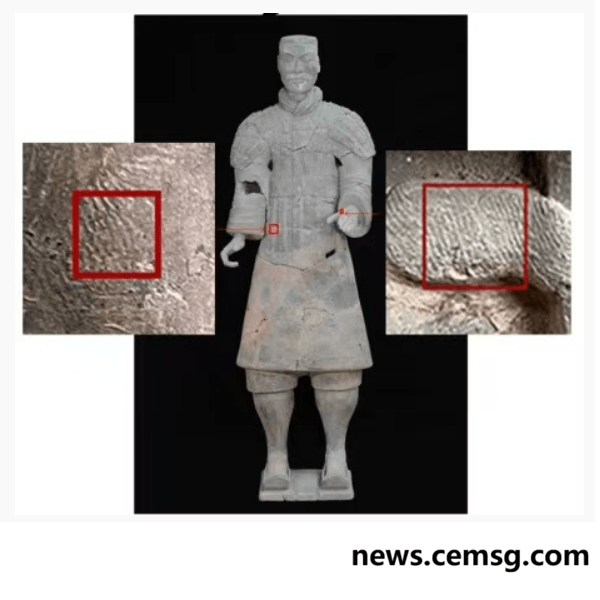
Researchers from the Emperor Qinshihuang's Mausoleum Site Museum and Shandong University analyzed 79 well-preserved fingerprints recovered from 23 terracotta figures in Unit T23, Pit 1 of the mausoleum. Using a Bayesian mixture model—a methodological advance over traditional linear regression approaches—they estimated the demographic composition of the workforce at the population level.
The results were striking:
- Adult males: approximately 45.0%
- Adult females: approximately 32.7%
- Juveniles under 15: approximately 22.3%
The age threshold of 15 was not arbitrary; it was inferred from Qin dynasty legal texts that defined age-based legal responsibility.
🔬 Methodology and Context
The fingerprints were left as a byproduct of the manufacturing process. 73 surface impressions were formed when artisans pressed their fingers directly onto wet clay during molding, shaping, and assembly; 6 relief impressions were created when they handled and attached pre-shaped clay details, such as decorative studs on armor and belts.
The prints were concentrated on separately prefabricated components—heads, arms, and armor—which aligns with the known "mold-casting combined with piece-by-piece assembly" production model. The study also found that the fingerprints of both adult males and adult females peaked around age 20, while the presence of juveniles is consistent with historical records of apprenticeship systems in which young people assisted master craftsmen.
⚠️ Important Caveats
The researchers were careful to note the limitations of their findings. The proportions reflect fingerprint frequencies rather than counts of individual artisans, and the study relied on a modern European reference dataset, which may introduce some bias in estimating female and juvenile representation. The sample from Unit T23 is also a localized area, so the results should be viewed as an estimate based on the available data, not a definitive census of the entire workforce.
💡 Why This Matters
This is the first quantitative biological evidence for a diverse workforce in the making of the Terracotta Army. It does not suggest that women and children were the sole or even the majority of producers—adult males remained the largest single group—but it does demonstrate that the monumental project was a collaborative effort involving multiple segments of Qin society.
The findings also resonate with other archaeological evidence from the Qin period. Historical records and studies of lacquerware production have already documented the involvement of women and children in state-supervised workshops. This new study extends that picture to one of the ancient world's most iconic craft enterprises.
The research was published in the peer-reviewed Journal of Cultural Heritage. It lays the groundwork for future large-scale fingerprint demographic surveys in other pits, including Pit 2, to build a more comprehensive picture of the labor organization behind the Terracotta Army.