China's First Commercial-Grade Small-to-Medium Purely Solar-Powered Drone Makes Successful Maiden Flight
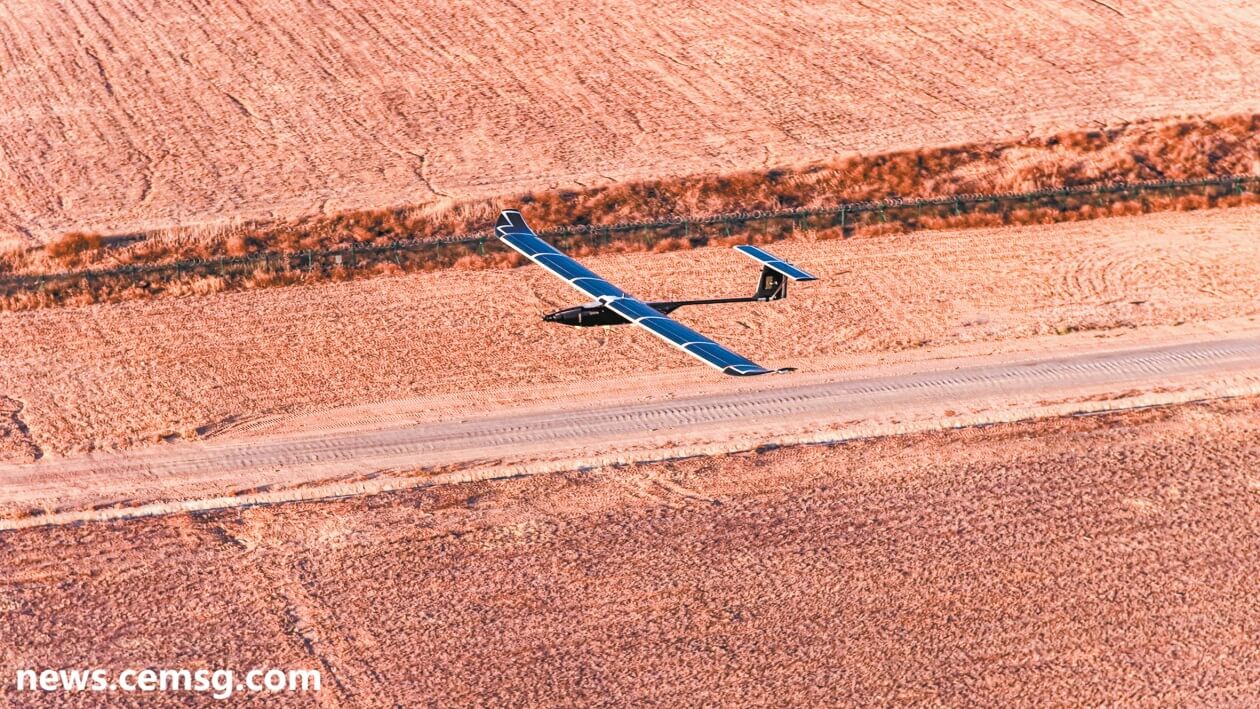
China’s first commercial-grade, small- and medium-sized pure solar-powered unmanned aerial vehicle (UAV), the “Qingqibing” (轻骑兵, “Light Cavalry”) , successfully completed its maiden flight on November 11, 2026, at an airfield in northwest China.
✈️ Overview
Developed independently by the 11th Research Institute of the China Aerospace Science and Technology Corporation (CASC) , the Qingqibing is a fully electric aircraft that uses solar energy as its sole power source. The successful flight is seen as filling a domestic gap in commercial products for low-altitude, small and medium pure-electric aircraft capable of long-endurance, low-cost, and large-area operations.
📊 Key Specifications
The aircraft’s design prioritizes green efficiency, low cost, and rapid mass production.
- Dimensions: 3.2 meters in length, with an 8-meter wingspan.
- Maximum Designed Endurance: 30 hours.
- Takeoff Weight: 45 kg.
- Service Ceiling: 7,000 meters.
- Payload Capacity: Greater than 5 kg.
⚙️ Core Capabilities and Deployment
The Qingqibing is designed around three core advantages: long endurance, rapid deployment, and convenient support.
- Modular Payloads: A modular design allows the UAV to quickly swap between different mission payloads, such as communications and remote sensing equipment.
- Vehicle-Based Launch: It can be launched from a vehicle, requiring only 20 minutes of ground preparation. This eliminates dependence on traditional airports and enables rapid deployment in the field.
🎯 Targeted Applications
The UAV is positioned for missions that demand persistent aerial presence over large areas. Its primary application scenarios include:
- Infrastructure Inspection: Patrols of highways, railways, power transmission lines, and long-distance pipelines.
- Water Conservancy: Inspection of major facilities such as reservoirs, river channels, and dikes.
- Surveying and Monitoring: Land surveying, natural resource investigations, and ecological monitoring of forests, grasslands, and desertification.
- Disaster Response: Rapid reconnaissance of flood, geological disaster, and forest fire zones.
- Large-Area Surveillance: Monitoring of coastlines, port areas, and other broad targets.
💡 Significance
The maiden flight marks a transition for China’s solar-powered UAV technology from the laboratory to the commercial market. It aligns with the country’s push to develop the low-altitude economy as a strategic emerging industry and supports its “dual carbon” goals through the use of green energy. The flight also validated the coordinated performance of the entire system, laying a foundation for the future serialization and large-scale application of solar-powered UAVs.